



Firefighter
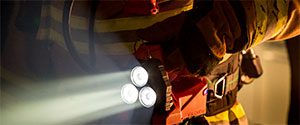
Firefighter Flashlights, Helmet Lights & Scene Lights | BrightGuy.com
Professional Firefighting Lights Built for the Job – Shop BrightGuy.com
A firefighter’s flashlight isn’t general-purpose gear. It has to survive heat, smoke, water, and impact. It has to operate reliably with bulky turnout gloves. It has to be operable with one hand, in zero-visibility conditions, under serious stress. And in structural firefighting, it may need to be NFPA-rated – certified to withstand 500°F temperatures without failing. BrightGuy.com is an authorized dealer of the most trusted firefighting light brands in the fire service: Streamlight, KBS Innovations, Nightstick, Pelican, and more – with the full range of structural flashlights, helmet-mounted lights, lanterns, and scene lights that departments across the country trust every day.
What Makes a Flashlight Right for Firefighting?
Firefighting imposes demands on a flashlight that no other profession does. Before choosing a duty light for fire service use, understand the features that separate a professional firefighting flashlight from everything else:
Smoke-Penetrating Beam
In a working structure fire, visibility can drop to inches. A tightly focused, high-candela beam cuts through smoke far better than a wide flood. Firefighting flashlights like the Streamlight Survivor series are specifically engineered with deep reflectors and focused optics to maximize downrange performance through smoke.
NFPA Compliance
The National Fire Protection Association sets performance standards for firefighting equipment.
Class I Division 1 (Intrinsically Safe) Rating
Many fire service environments – including scenes involving gas leaks, fuel spills, or industrial hazards – require lights rated for explosive atmospheres. Class I Division 1 means the flashlight cannot produce a spark or generate enough heat to ignite flammable gases or vapors.
Gloved-Hand Operation
Turnout gloves are thick and reduce dexterity significantly. Firefighting flashlights use large rubber dome push-button switches, oversized controls, and D-ring/clip attachment systems designed for one-handed operation with full PPE on.
Right-Angle Body Design
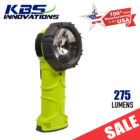
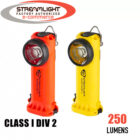
The right-angle form factor is the standard in fire service because it allows the light to clip onto a turnout coat, SCBA harness, or equipment ring – staying accessible and pointing forward without requiring the firefighter to hold it.
IP67 Waterproof & Impact Resistance
Firefighting environments are wet, rough, and extreme. IP67 means the light is fully waterproof to 1 meter for 30 minutes – protecting it from fire suppression, weather, and submersion.


Frequently Asked Questions
-
What flashlights do firefighters use?
Firefighters typically use right-angle flashlights that clip to turnout gear, plus helmet-mounted lights for hands-free visibility. These lights are built to handle heat, water, and impact, and many are intrinsically safe so they can be used safely around flammable gases and vapors.
-
What is a right-angle firefighter flashlight?
A right-angle flashlight has the head set at 90 degrees to the body so it can clip to a coat or chest strap and shine forward while keeping the firefighter's hands free. This design is a long-standing standard for fire service because it works well with turnout gear.
-
Should a firefighter flashlight be intrinsically safe?
Many fire service flashlights are intrinsically safe so they can be used in atmospheres that may contain flammable gases or vapors without risk of ignition. For scenes involving fuel, gas leaks, or unknown hazardous atmospheres, an intrinsically safe light is the safe choice.
-
How bright should a firefighter flashlight be?
Firefighter lights need enough output to cut through smoke and dark structures, commonly in the few-hundred to over 1,000 lumen range depending on the model and role. Beam type matters too: a focused beam helps in smoke, while a wider beam lights up close work areas.
-
What features matter most in a firefighter flashlight?
Key features include heat and impact resistance, water resistance, an intrinsically safe rating where needed, a secure clip or helmet mount, glove-friendly controls, and reliable battery performance. Durability and dependability matter more than maximum brightness alone.
-
Can firefighter flashlights mount to a helmet?
Yes. Helmet-mounted fire service lights provide hands-free lighting and are widely used alongside a clip-on right-angle light. Helmet lights should mount securely to fire helmets and withstand the same heat and impact as the rest of the gear.
-
Are firefighter flashlights rechargeable?
Both rechargeable and disposable-battery firefighter lights are available. Rechargeable models are convenient for stations that charge between calls, while disposable-battery models can be quickly refreshed in the field. Many departments use a mix based on role and preference.
-
What is the difference between a firefighter flashlight and a regular flashlight?
Firefighter flashlights are built for extreme conditions: heat, water, impact, and often hazardous atmospheres. They commonly use a right-angle or helmet-mount design for hands-free use and carry intrinsically safe ratings. A regular flashlight is not designed for these demands.