



Industrial Flashlights

Frequently Asked Questions
- What makes an industrial flashlight different from a consumer flashlight?
Industrial flashlights are purpose-built for demanding job site conditions. Look for models with IP ratings, drop-tested durability, and shatter-resistant lenses - these aren't your everyday flashlights. They're also designed to operate reliably shift after shift, with energy-efficient LEDs that deliver longer runtime from the same battery capacity, reducing the need for mid-shift charging or battery swaps and keeping crews productive without interruption.
- What industries rely most on industrial lighting?
Industries including oil and gas, mining, chemical processing, and manufacturing rely on specialized industrial lights to maintain safety and compliance. They're also widely used in law enforcement, military, and other professional fields where reliable, high-performance illumination is critical.
- What should I look for when buying an industrial flashlight or work light?
Look for lights with high lumen output to ensure adequate illumination for your workspace. Also consider the color temperature - cooler white light provides great visibility and clarity, while warm light provides superior color rendering. Beyond brightness, consider rugged, jobsite-ready build quality including IP ratings, drop-tested durability, shatter-resistant lenses, and high-capacity Li-ion batteries for stable 8+ hour shifts.
- What is an IP rating and why does it matter for industrial lights?
IP stands for Ingress Protection. Check for ratings like IP66, IP67, or IP68 to ensure resistance to water, dirt, and dust. The higher the rating, the more protection your flashlight offers. For industrial environments, at minimum IP67 is recommended - IP67-rated construction delivers complete protection against dust ingress and water immersion, maintaining safety integrity even in challenging underground or wet conditions.
- What is Color Rendering Index (CRI) and why does it matter on the job?
CRI indicates how accurately a light source renders colors compared to natural daylight. This matters for tasks like identifying wire colors, inspecting welds, or assessing surface conditions. A high-CRI light reduces errors and improves safety in detail-oriented industrial work.
- What does "intrinsically safe" mean?
Intrinsically safe means the light uses a limited amount of electrical energy so that sparks cannot occur at amperages and voltages that may result in explosions in hazardous atmospheres. This makes them essential in environments where flammable gases, vapors, dusts, or fibers may be present.
- What are Class and Division ratings on industrial lights?
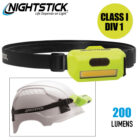
Class and Division ratings define the type and degree of hazardous environment a light is certified for. Class I locations involve volatile gases or vapors, Class II involves combustible dusts, and Class III involves ignitable fibers. Division 1 means the hazardous substance is present under normal operating conditions, while Division 2 means it may only be present under abnormal conditions. Always match the light's rating to your specific work environment.
- Why use a headlamp instead of a handheld flashlight for industrial work?
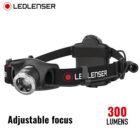
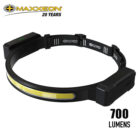
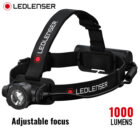
Headlamps provide hands-free lighting that is essential in dark, confined, and restricted working spaces where workers need both hands free to operate tools or handle materials safely. They direct light exactly where you're looking without requiring you to hold or set down a separate light source.
- When should I use an area light instead of a flashlight or headlamp?
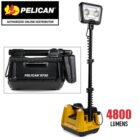
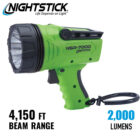
Portable floodlights work well for illuminating work zones, equipment staging areas, and general site coverage, while focused beams suit inspection tasks, electrical work, and situations requiring concentrated light on specific components. Area lights are the right choice whenever you need to illuminate a large space for multiple workers rather than a single focused task.
- Are cordless work lights a safety advantage on job sites?
Yes. Cordless lights eliminate tripping hazards, reducing workplace accident liability and supporting OSHA compliance. They also allow workers to set up lighting in confined spaces, trenches, or areas far from power sources without running extension cords through the work area.
- What battery type is best for industrial work lights used on long shifts?
High-capacity lithium-ion batteries are preferred for stable 8+ hour shifts. A rechargeable LED work light that consumes less power per lumen delivers longer runtime from the same battery capacity, reducing the need for mid-shift charging or battery swaps and keeping crews productive without interruption.