



Professional Trades
Frequently Asked Questions
- What makes a flashlight suitable for professional trade use?
A professional trades flashlight needs to meet a higher standard than a consumer light on three fronts: durability, output, and practicality on the job. That means enough brightness to illuminate dark and confined work spaces, and a beam profile suited to the specific trade. Features like pocket clips, belt loops, magnetic bases, and right-angle heads that allow hands-free use are also critical for tradespeople who need both hands free to work.
- What type of flashlight do electricians use?
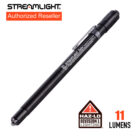
Electricians typically rely on two types of lights: a slim pen light that fits into tight panel boxes and conduit chases, and a right-angle light or headlamp for hands-free work when both hands are needed. High CRI (color rendering index) output - 90 or above - is especially important for electricians because accurate color identification of wires is a safety-critical task. Streamlight's Stylus Pro and Stinger series are widely used in the electrical trade.
- What is CRI and why does it matter for trade professionals?
CRI stands for Color Rendering Index - a measure of how accurately a light renders color compared to natural daylight, on a scale of 0 to 100. For most trade applications, a CRI of 80 is a reasonable minimum; 90+ is ideal for tasks where color matters. Electricians identifying wire colors, painters matching finishes, and HVAC technicians reading equipment labels all benefit from high-CRI output. A high-lumen light with low CRI can make colors look flat, washed out, or misleading - a real problem in safety-sensitive environments.
- What is an intrinsically safe flashlight?
An intrinsically safe (IS) flashlight is specifically designed and certified for use in hazardous locations where flammable gases, vapors, liquids, or combustible dust may be present. They are engineered to eliminate any internal spark or heat source that could trigger ignition. Intrinsically safe lights are rated for Class I, II, or III hazardous environments. They are required - not optional - for oil and gas, petrochemical, mining, grain handling, and certain utility applications. Using a non-IS rated light in a classified hazardous location is a serious safety violation.
- What is the best flashlight for working in tight and confined spaces?
For confined spaces like wall cavities, crawlspaces, attics, and tight utility chases, compact right-angle lights and headlamps are the most practical choice. Their 90-degree head design allows the light to sit flush against a surface or clip to a hard hat brim, directing the beam forward while keeping the body of the light out of the way. Pen lights with a pocket clip are also useful for very tight spaces where even a right-angle head is too bulky.
- What flashlight features matter most for mechanics and automotive technicians?
Mechanics need lights that stay put without a second set of hands. The most practical features for automotive work are a strong magnetic base for attachment to metal surfaces inside an engine bay, a flexible gooseneck or pivoting head for precise positioning, a wide flood beam that eliminates shadows across a large work surface, and a high CRI rating for accurate color identification of hoses, wires, and fluid contamination. Rechargeable models are preferred by most shop technicians for the convenience of topping off between jobs.
- What is a right-angle flashlight and who uses it?
A right-angle flashlight has its head positioned at 90 degrees to the body, like an L-shape. This design allows it to clip to a uniform pocket or tool belt and direct light forward hands-free - making it one of the most versatile form factors for trade use. Electricians, plumbers, HVAC technicians, and utility workers commonly use right-angle lights as their primary jobsite flashlight. Streamlight, Pelican and Nightstick both produce right-angle lights widely specified by trade professionals.
- How important is battery runtime for a trades flashlight?
Extremely important. A light that dims or dies mid-job is worse than a nuisance - in some environments it's a safety issue. Look for lights that deliver meaningful runtime at working brightness levels, not just at their lowest mode. Rechargeable models with a battery level indicator are preferable for tradespeople who work long shifts, as you can monitor charge status and top off between jobs rather than being caught off guard. For field work without reliable access to charging, lights that accept standard AA or AAA batteries as a backup are a smart choice.
- What flashlight brands do professional tradespeople trust most?
Streamlight is the most widely used brand across professional trades - their Stinger, Strion, ProTac, Vulcan, LiteBox and Stylus Pro lines are found on jobsites and in service vans across North America. Pelican, Nightstick, Fenix, Princeton Tec, and Underwater Kinetics are also trusted by trade professionals. BrightGuy carries the full range of these brands, with expert guidance to help you match the right light to your specific trade and work environment.